25th February 2019
The Columbus took on her pilot outside Sydney Harbour at 5:30 am. Many passengers gathered on deck in the darkness, eager to watch the iconic Opera House and Harbour Bridge pass by as we made our way to a berth in White Harbour. However, to their disappointment, the Opera House remained unlit, and the usually brightly illuminated bridge had only its navigation lights on, though its outline was still clearly visible.
Sue and I opted for a more relaxed approach, watching the bridge slowly draw closer on the TV from the comfort of our cabin bed before heading up top for breakfast as we made fast to the wharf.
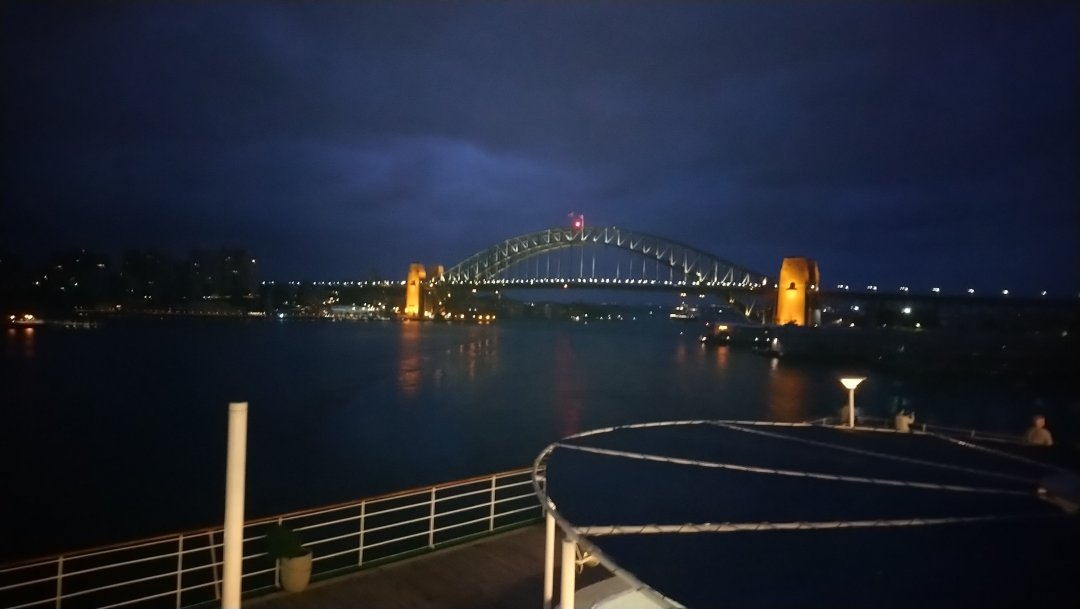
Today, we were jumping ship, having packed our cases the night before. While we enjoyed breakfast, our luggage was being transferred ashore, ready for collection. We left what had been our home for the past two months at around 8:45 am, and after passing through customs, we retrieved our cases and located our taxi transfer to the hotel in Castle Hill.
The journey took nearly an hour, surprisingly long, and had it not been a Sunday, it might have taken even longer.
The Hills Lodge Grand Mercure is a modern hotel designed to resemble an authentic British mansion, though the climate and flora quickly give away its true origins. We were disappointed to discover how far it was from Circular Quay, but we were determined to make the most of what the area had to offer.
It turned out that Carnival was coming to Sydney that weekend, and every hotel in the city centre had been fully booked for a year. More popular than Australia Day or New Year’s Eve, it is an event held exclusively for the LGBTQ+ community. How times change.

The hotel reception staff were excellent, swiftly providing us with Opal cards, cash, and a taxi shortly after our arrival to take us to Parramatta Ferry, where we planned to visit Cockatoo Island. The ferry follows the Parramatta River, eventually reaching Circular Quay, though our venue was two stops earlier.
The service is popular with both locals and visitors and is usually quite full, with passengers constantly boarding and disembarking at the many stops along the route. Our journey took 1 hour and 5 minutes, but the efficiency of the crew meant that unloading and taking on new passengers never took more than a moment. Their seamless docking procedures ensured they met the timetable every time.
At first, the river was fairly narrow, around 40 metres wide, with mangroves lining both banks. Here, the ferry was restricted to 5 mph to avoid creating a wash that could damage the shoreline vegetation. The mangroves teemed with birdlife, pelicans, herons, and cockatoos were prevalent, along with many other colourful species whose names I didn’t recognise. As the river widened and the banks became reinforced with rocks, the ferry picked up speed, and the stops became more frequent, with names such as Kissing Point, Abbotsford, and Dulwich.
The houses and settlements along the shore were clearly upmarket, and under the warm sun and clear blue sky, they looked especially idyllic. It must be a wonderful place to live, if you can afford it. After passing Sydney Olympic Park, we started to see apartment blocks, presumably built for the athletes but now home to local residents. Glass seems to be the dominant architectural material along this stretch of the river.
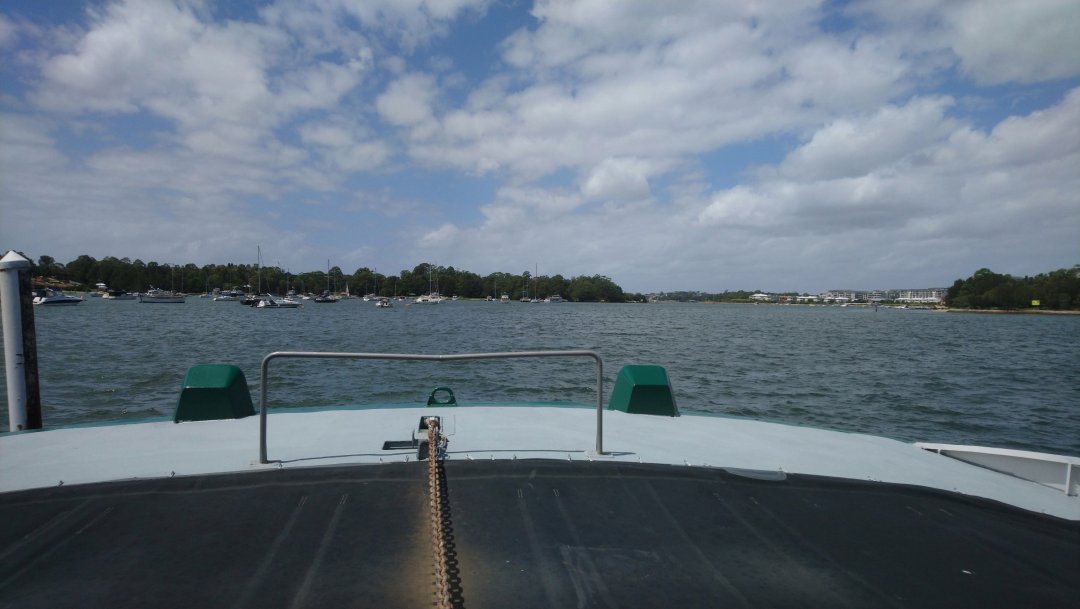
Cockatoo Island is very close to central Sydney and was originally inhabited by Aboriginal people, for whom it remains a sacred site. When the British arrived, however, it was turned into a prison for convicts deemed too violent or disruptive for other gaols.
Not long afterwards, a dry dock was constructed to service and repair the British fleet, with prisoners forced to undertake most of the backbreaking labour to build both the dockyard facilities and the ships themselves. Conditions for the inmates were among the worst in the British Empire, and deaths were common. The warders developed a fearsome reputation for brutality.
Following the prison’s closure, the island continued to serve as a shipbuilding and repair yard before briefly reverting to a penal facility. At one point, it was also used as a school for girls. During the First and Second World Wars, Cockatoo Island once again became a key centre for shipbuilding for the Australian Navy, before being abandoned in the 1960s.
Today, it is recognised as an important heritage site, with ongoing conservation efforts to preserve its history.

The island is free to visit, with the only charge being $5 for a headset from the Tourist Information office, which provides commentary at various stopping points along the marked routes on the provided map.
We arrived early in the afternoon when there were few visitors, but as the day progressed, it became noticeably busier. Most of the shipbuilding-related structures remain, though many are in a poor state and inaccessible to the public. However, the buildings linked to the island’s history as a prison appear to have undergone significant restoration. The information boards on most buildings were excellent, offering a vivid insight into the island’s past.
There are three tunnels running from one side of the island to the other, though only two are open to the public. As we walked through, we noticed the chisel marks on the walls, evidence of the prisoners who carved them out long ago.
From the highest point on the island, there are spectacular views over the Parramatta River, Sydney Harbour Bridge, and central Sydney, where even the Opera House is visible in the distance.

It was a lovely way to spend an afternoon and to experience a piece of Australian history, one that many Aussies are only just beginning to appreciate. The trip up and down the river was worth the effort alone. It was along this very river that Captain Phillip sailed before establishing the first European settlement in Australia on the site of present-day Parramatta.
On our return journey via the ferry, we stopped for a meal at a small riverside restaurant before taking a taxi back to the hotel. We were exhausted; it had been a long but rewarding day.
For our final full day in Castle Hill, we decided to visit the Koala Reserve. Armed with our Opal cards and guided by Google Maps on my phone, we caught a bus to Castle Hill Terminus, then transferred almost immediately onto another bus for the short journey to the reserve, just a few kilometres away. The transport system here is impressively efficient.
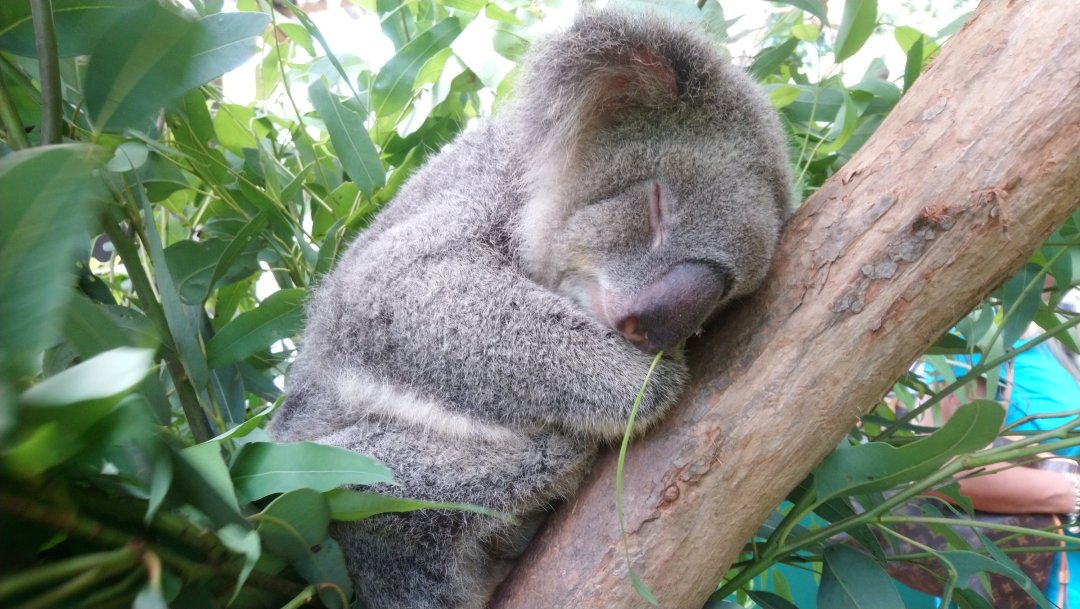
After paying the entrance fee of $28 each, we set off with a site map and a schedule of feeding times, ready to enjoy ourselves.
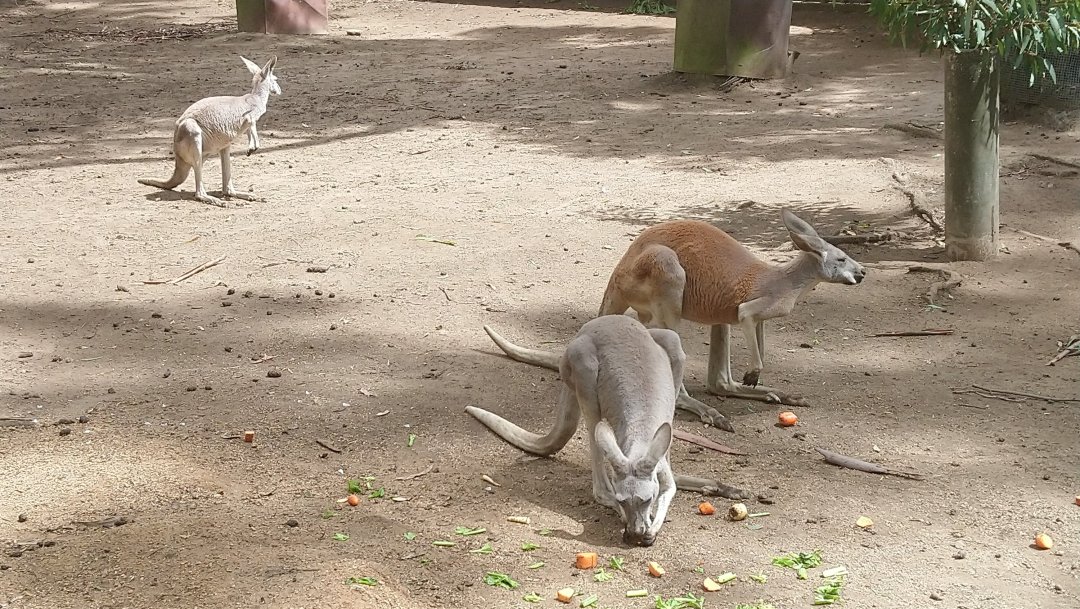
The highlights included stroking the koalas, feeding the kangaroos and an emu, chatting with a very friendly kookaburra and penguin, and spotting an echidna on the move. We also managed to wake up two wombats and watched a sheep being sheared. There were plenty of other animals to see, including bats, though they mostly just hung around and showed little interest in interacting with us.
Oh, and of course, Sue found the obligatory snake to stroke, as she always does!

After seeing everything, we had lunch in the reserve restaurant before going around again to revisit our favourites. It was a lovely way to spend the day, with plenty to see, even Shetland ponies, though we couldn’t quite work out why they were there!
We retraced our steps to the hotel, pausing to browse the shops in Castle Hill along the way.
That evening, we had dinner in a local bar before returning to our room to pack in preparation for our transfer to the airport the following morning.


Leave a Reply